HOW DARK IS THE NIGHT?
Not all night skies are equally dark.
By measuring sky brightness and observing how much artificial light is present, we can better understand the quality of the night environment and how well it is being protected.
So how do we measure darkness?
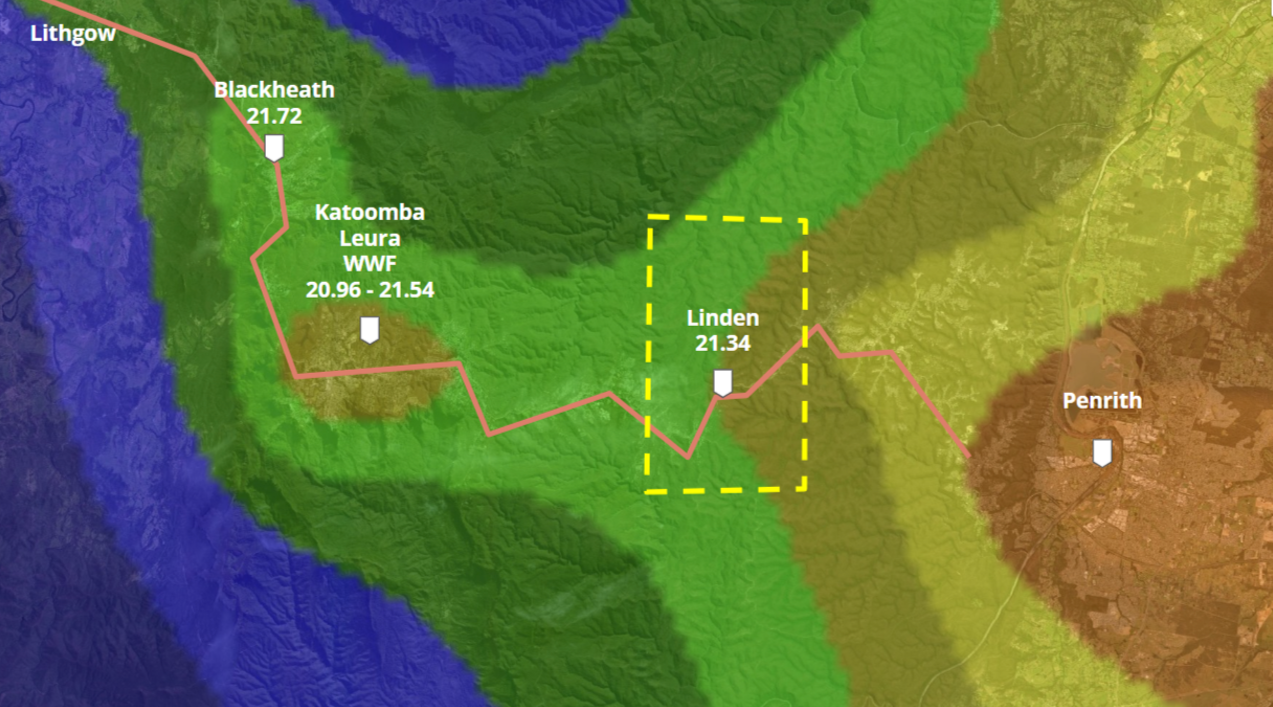
Sky Quality Meters
A Sky Quality Meter (SQM) measures the brightness of the night sky in magnitudes per square arcsecond. The scale can seem counter-intuitive: the higher the number, the darker the sky.
A naturally dark, pristine sky can records around 22.
Linden Observatory has recorded an SQM reading of 21.34, demonstrating how dark the site remains despite its proximity to Greater Sydney.
A simple comparison
22.0 — Near-pristine natural darkness
21.34 — Linden Observatory
19.39 — Penrith 18.41 — Sydney CBD
Think of it simply as a darkness scale: the closer the reading is to 22, the darker the sky and the less artificial skyglow is present.
Even relatively small differences on the SQM scale represent significant changes in sky brightness, making Linden an important dark-sky location on Sydney's doorstep.
The Bortle Scale
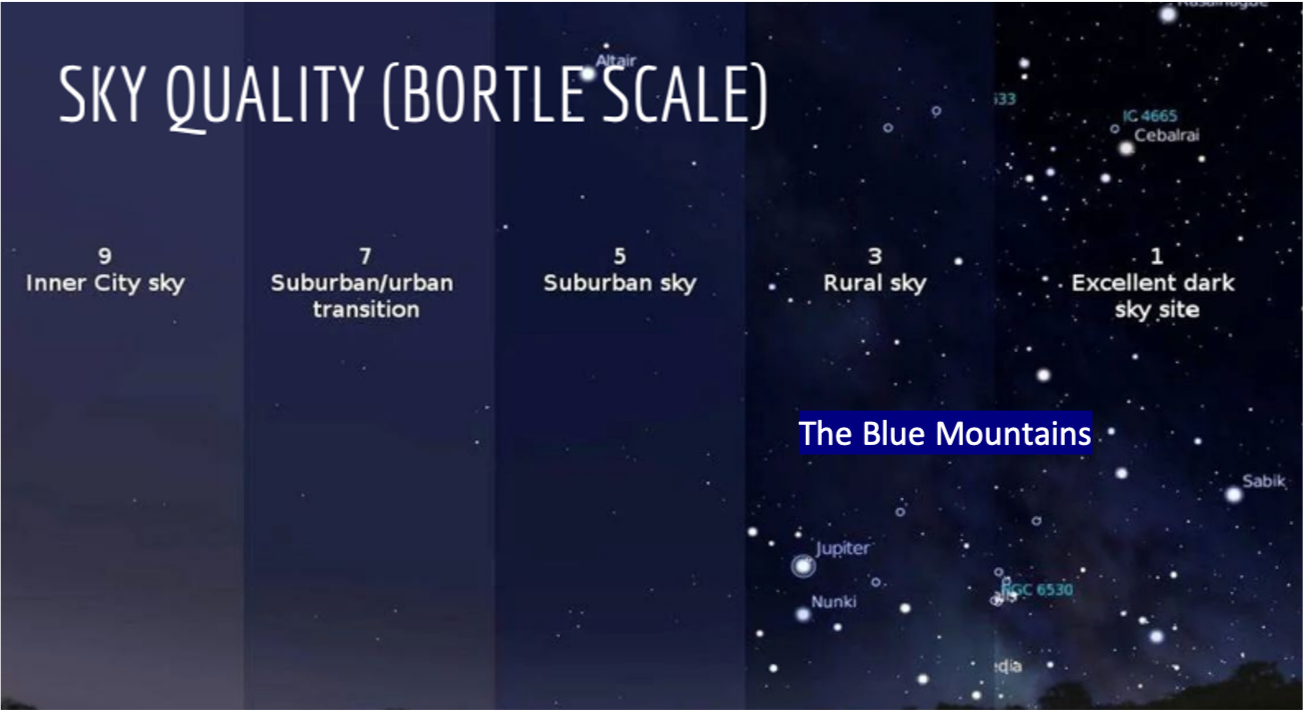
The Bortle Scale is another way of describing night-sky quality. Rather than using an instrument, it classifies how well an observer can see the night sky. It ranges from:
Bortle 1 — exceptionally dark, natural skies through to
Bortle 9 — heavily light-polluted inner-city skies. Linden Observatory sits at about 3.5
Observers consider things such as how clearly the Milky Way can be seen, how many stars are visible, the brightness of the horizon and how much artificial skyglow is present.
SQM readings provide an objective measurement, while the Bortle Scale helps describe the experience of standing beneath that sky.
What is skyglow?
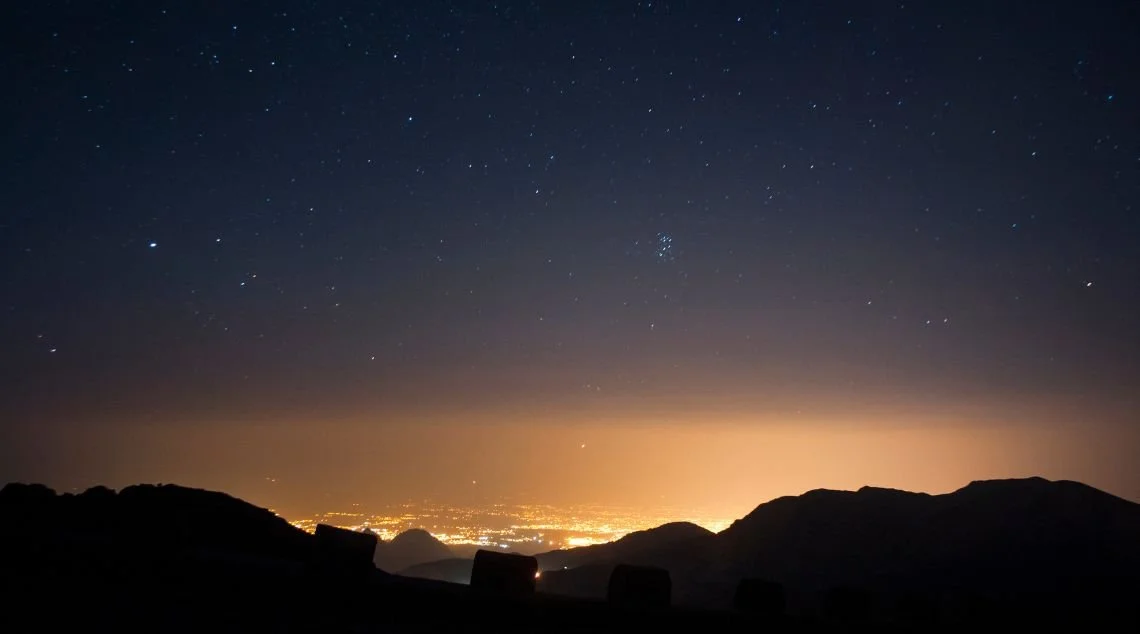
Skyglow is the brightening of the night sky caused by artificial light scattered through the atmosphere.
Much of it comes from outdoor lighting that is too bright, poorly directed or allowed to shine upwards. The effect can spread far beyond the source of the light, meaning cities and towns can brighten the sky many kilometres away.
Skyglow reduces our view of the stars, changes the natural character of the night and can affect nocturnal wildlife and ecosystems.
Linden Observatory
Regular measurements at Linden Observatory allow us to track changes in darkness over time. By combining SQM readings, Bortle observations and monitoring of skyglow, we can better understand the quality of our night environment and identify whether artificial light is increasing or decreasing.
Protecting darkness doesn't mean turning off every light. It means using light thoughtfully — only where it is needed, when it is needed, at an appropriate brightness, and directed towards the ground rather than the sky.
Linden's dark skies are a remarkable natural asset. Measuring them helps us understand what we have — and gives us the information we need to protect them.